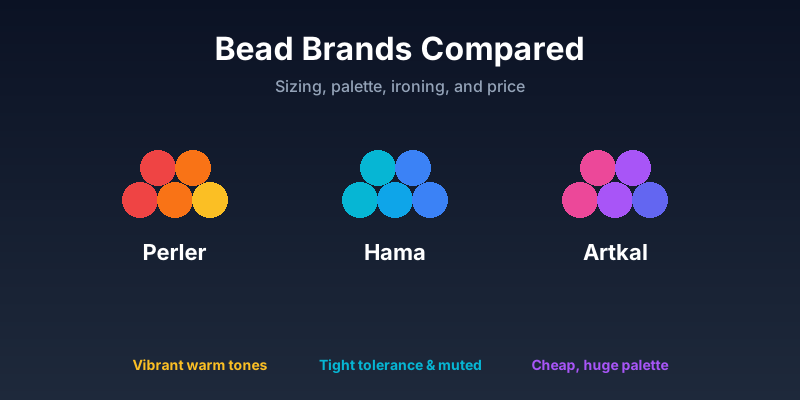
Perler vs Hama vs Artkal: The Ultimate Bead Brand Comparison
If you have spent any time in the fuse-bead community, you have probably heard the three big brand names argued about. Each one has a personality, and the brand you pick determines what your finished piece will look and feel like. Here is the no-nonsense comparison most beginner guides skip.
Bead size
Perler and Artkal Midi share a 5 mm bead; Hama Midi is 5 mm too, but with slightly tighter tolerance. All three sit on the same pegboard pitch, so you can mix them in a pinch — but never mix Mini and Midi in one project, the heights don't match after ironing.
Color palette
- Perler: Warm, vibrant palette. Best reds and oranges. Around 90 standard colors.
- Hama: Cooler, more muted palette. Best blues and skin tones. Around 60 standard colors plus pastels.
- Artkal: The widest palette of the three — 200+ shades when you include the Soft and C-series. Hex codes are published, which makes them perfect for PixCraft-generated patterns.
Ironing
Perler tolerates higher heat (around 165°C / medium iron) and fuses fast. Hama needs a slightly cooler iron (medium-low) and longer dwell time, but produces a more even surface. Artkal sits in between, with very little smell during ironing.
Price-per-bead
For a 1,000-bead reference set: Artkal is the cheapest, Perler is mid-range, Hama costs the most outside of Europe (and the least inside Europe). If you are bulk-stocking a single color, Artkal Soft is usually the best value.
Which brand should I pick?
Pick one brand per project for consistent results, generate a palette-matched pattern in PixCraft, then iron at that brand's recommended temperature. The differences are small enough that any of the three will produce a great-looking piece — the bigger lift comes from a good pattern.